
Are Utah Home Prices Going to Drop or Crash?
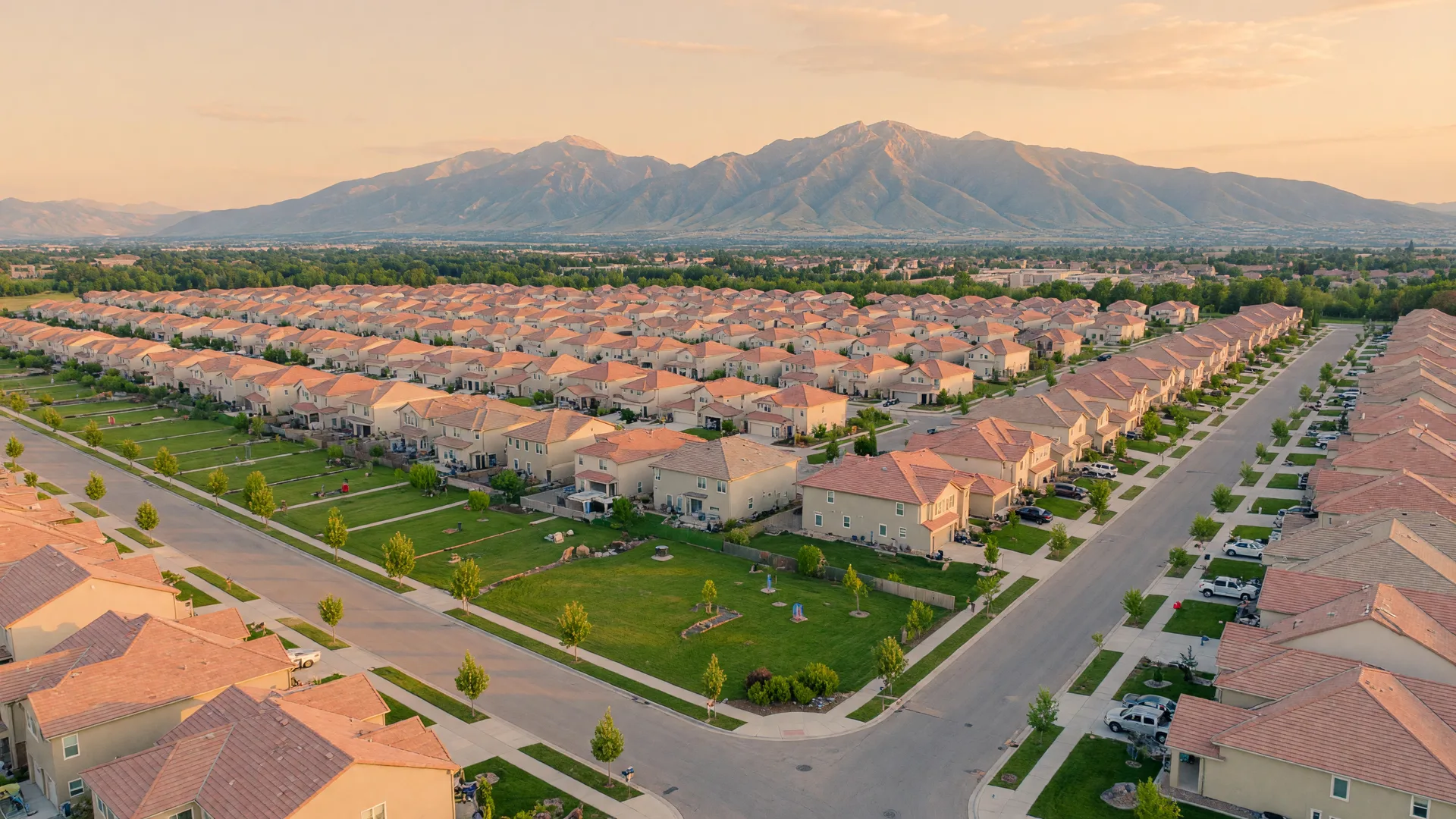
Image is AI-generated for illustrative purposes.
People keep asking whether Utah home prices are going to crash, and it is the right question to ask when your biggest purchase is on the line. The short answer based on everything published so far in 2026: the market is normalizing, not crashing, and there is a meaningful difference between the two. This post explains that difference, lays out the numbers, and is honest about what nobody can guarantee.
Crash versus normalization
A crash means a sharp, broad, fast decline in prices, usually driven by forced sales: job losses, foreclosures, or a sudden flood of inventory hitting the market all at once. What Utah is experiencing is different. Prices are essentially holding steady, sometimes inching up and sometimes inching down by neighborhood, while inventory rises to more normal levels. That is a normalization: the extreme conditions of the pandemic market unwinding toward something balanced, without the floor falling out.
KUER's reporting on the Salt Lake Board of Realtors' January 2026 forecast captured the mood precisely with its headline: Utah's housing market was expected to be "running in place" in 2026. The forecast saw a fourth year of post-pandemic flatlining rather than a correction underway. "Running in place" is not a crash, and it is not a boom either. It is a market catching its breath.
What the numbers show
Start with the statewide median. Redfin data reported by KSL.com puts Utah's median sale price around $574,200, up about 1.8% year over year. Gains like that are small, but they are gains, and a market that is still appreciating at all is not a market in freefall. Prices jumped roughly 40% between 2020 and 2022, and the story since has been a leveling-off from that peak, not a reversal of it.
Inventory tells the same story. Utah's months-of-supply has risen to roughly 3.5 to 4.5 months depending on the report and month, up from the extremely tight two-to-three-month levels of a few years ago. More supply gives buyers breathing room and slows price growth, but a balanced market is usually defined as four to six months of supply. Utah still sits below that, meaning the market remains, on average, modestly tilted toward sellers.
Sites like bestutahrealestate.com and homesintooele.com have both directly addressed the "prices to drop?" question in 2026, and their analyses converge on normalization rather than crash. Local discussions like these are worth reading because the statewide median hides meaningful variation, and the sellers in one submarket may be facing very different conditions from another.
What is holding prices up
Several structural forces are working against a crash in Utah. First is the rate-lock effect: millions of owners financed at very low rates in 2020 through 2022, and selling today means giving up a 3% mortgage for a 6.5% one. Many simply do not list, which keeps resale inventory lean and protects prices in the most rate-sensitive segments.
Second is persistent demand. Utah keeps adding residents, and the Wasatch Front's job growth, anchored by the Silicon Slopes corridor, continues to draw workers who need homes.
Third is land constraint. The Wasatch Front is pinned between mountain ranges, buildable land is limited, and development faces water and infrastructure questions. Supply cannot expand overnight the way it did in boom-and-bust markets elsewhere, which is one reason Utah prices have shown more resilience than some national forecasts expected.
The honest caveats
Now the part nobody can package neatly. No one can guarantee prices. Forecasts are informed opinions, and this one could be wrong in either direction. Also, averages lie a little: the statewide median around $574,200 mixes luxury foothill markets with entry-level townhomes, and individual cities and even subdivisions can diverge from the county trend. A market that is stable on average can still see specific homes sell below what their sellers hoped.
Affordability is the other honest caveat. Elevated rates near 6.5% to 6.7% keep monthly payments high even with flat prices, and buying at current prices and rates is genuinely expensive compared with what the same home cost in 2019. That pressure shows up as slower sales and longer days on market in some segments, and it is a real constraint on how much prices can keep growing. It is just not, on the evidence so far, the same thing as an imminent crash.
Where this post fits
Our monthly market updates track the numbers month to month, city by city; this post answers the crash question specifically. If you want the latest data, start with our September 2026 Wasatch Front market update and the Salt Lake County home value snapshot. If you are weighing whether to buy against this backdrop, our decision framework for 2026 walks through it question by question.
Wondering what is actually happening in your neighborhood?
County-wide averages do not tell you what is happening on your street. We track each Wasatch Front community month to month and can show you recent sales, price trends, and true inventory for the exact area you are watching.
Sources & Further Reading
- KUER: Utah's housing market is expected to be "running in place" in 2026
- KSL.com: Utah housing market update for 2026
- bestutahrealestate.com: Should You Buy a Home in Utah in 2026?
- homesintooele.com: Should Utah Homebuyers Expect Home Prices To Drop in 2026?
- Salt Lake Board of Realtors: 2026 Housing Forecast Report
Median price and inventory figures are the most recent reported at publication and vary by source and month. Nothing here is a price guarantee: submarkets differ, data is revised, and future conditions can change. Verify current numbers on the MLS and with a local agent.
Related Articles