Why Are Utah Home Prices Outpacing Wages? 3 Utah Metros Rank in the National Top 20
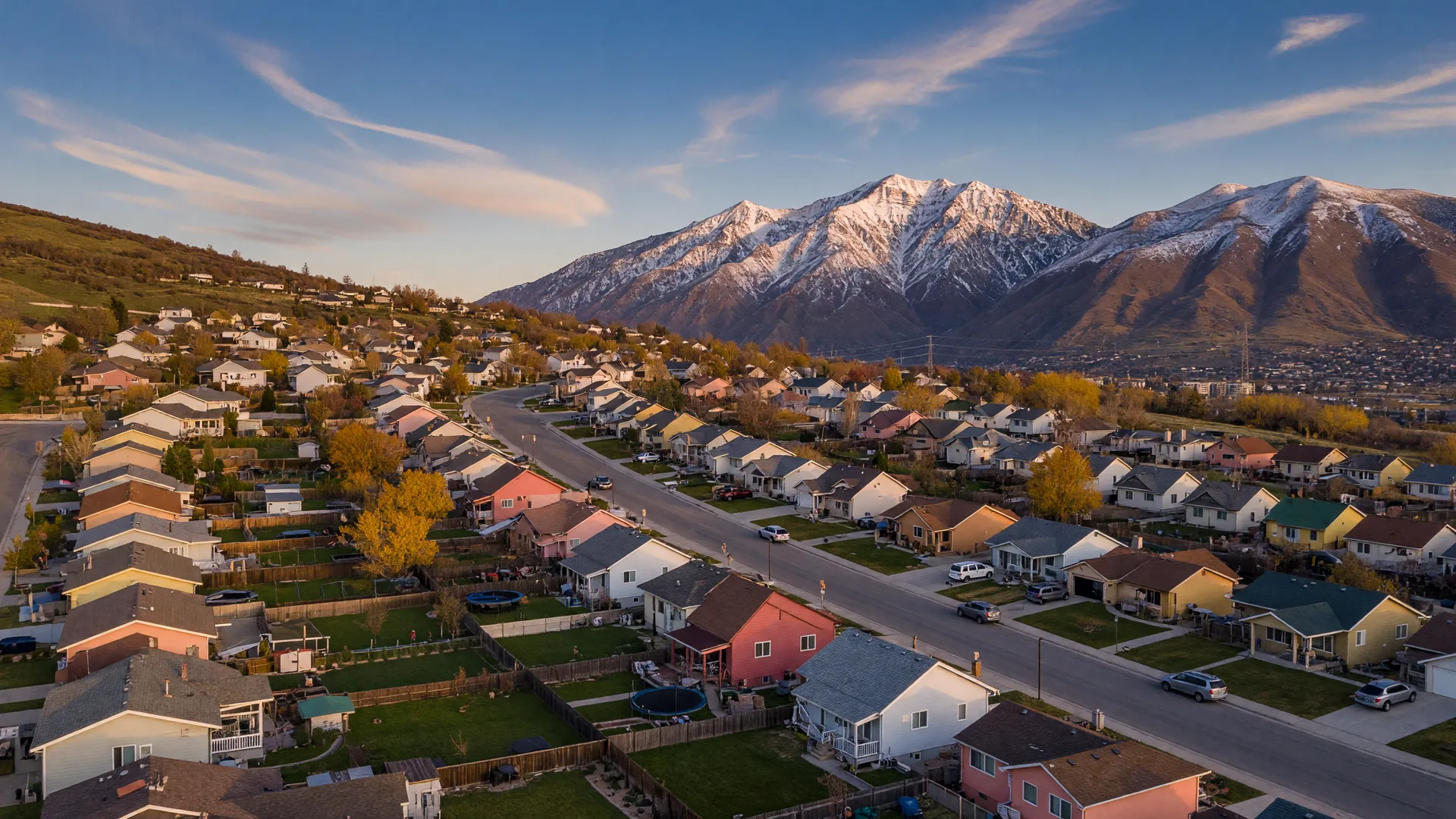
Image is AI-generated for illustrative purposes.
Three Utah metros now rank among the top 20 in the country for how far home prices have outpaced wages since 1990. The ranking comes from a recent WalletHub analysis of long-term data from the Harvard Joint Center for Housing Studies, and it has been circulating through Utah news and social channels this fall. For families shopping the Wasatch Front, it is a striking headline, and a useful starting point: behind the numbers is a simpler truth. Homes here cost much more, relative to local paychecks, than they did a generation ago.
This post walks through what the ranking actually measures, where Utah's metros landed, why the gap has grown so wide, and what it realistically means for buyers in Salt Lake and Utah counties today. The short version is that this is a challenge, not an impossibility, and the practical steps for approaching it are very concrete.
How does the ranking work?
The ranking is built on a price-to-income ratio, which sounds technical but is really a simple idea. It compares the rise in housing costs with the rise in local earnings over the same stretch of time, in this case from 1990 through 2025. If home prices and household incomes had grown at the same pace, the ratio between them would hold fairly steady. When that ratio climbs, housing costs have pulled ahead of what the typical household in that metro earns.
Put plainly: the larger the increase in that ratio, the more a local wage has lost ground to local home prices, and the harder it is for an ordinary working family to turn a paycheck into a down payment and a mortgage on a typical home. The analysis draws on data from the Harvard Joint Center for Housing Studies, a widely cited academic source on housing markets, as assembled by WalletHub and shared on Utah's "Utah is Awesome" and "Utah News" social channels.
Where did Utah's metros land?
According to the ranking, all three of Utah's metros in the top 20 sit comfortably inside the top tier:
- Salt Lake City-Murray ranked 8th nationally, with a 155% increase in its price-to-income ratio between 1990 and 2025.
- Ogden ranked 16th, with a 138% increase over the same period.
- Logan (the Utah-Idaho metro) ranked 17th, with a 136% increase.
The wider list matters for context: western metros dominated the top 20, including Coeur d'Alene (185%), Missoula (169%), Bozeman (168%), Pocatello (157%), Bellingham (156%), and Corvallis (155%). The pattern is regional. Across the Mountain West and Pacific Northwest, fast-growing communities have seen housing costs run well ahead of incomes over the past three and a half decades, with Utah sitting squarely inside that trend.
As with any ranking, exact percentages can shift a bit depending on the data vintage and rounding, and other analyses measure the affordability gap with slightly different methods. The direction, though, is consistent across sources, and the direction is what matters for planning purposes.
Why is the gap so wide in Utah?
Economists and housing analysts who watch Utah point to a familiar combination of forces:
- Strong, long-term demand. Utah has grown steadily for decades, and the Wasatch Front is where most of that growth has concentrated. More households competing for a limited set of homes pushes prices up.
- A supply that has struggled to keep pace. Land is a real constraint in a valley rimmed by mountains and lakes, and new construction, while active, has not been able to close the gap between how many homes families need and how many exist.
- Rising construction costs. Land, labor, materials, and the regulatory costs of building all add to the final price of a new home, and those costs have climbed.
- The recent price run-up. Home values along the Wasatch Front rose sharply over the last several years. Incomes in Utah have grown too, but not at the same speed, which is exactly what this kind of ranking captures.
None of this is unique to Utah. Fast-growing western metros show the same pattern, which is why so many of them crowd the top of the list. Understanding the why does not make a bigger mortgage payment easier, but it does explain why affordability has become the defining housing conversation in this state.
How is the market doing right now?
Recent research suggests the market has cooled from its hottest stretch even while affordability remains stretched. A few dated, source-backed points:
- The Kem C. Gardner Policy Institute at the University of Utah reported on September 9, 2026, that Utah's housing market has stabilized slightly over the past year while affordability barriers remain. The institute found that homeownership is still beyond the reach of many households, especially prospective first-time buyers and renters.
- Axios Salt Lake City reported on January 22, 2026, that more than 80% of homes on the market in the Salt Lake City metro were unaffordable to the area's typical household under common lending assumptions, a share above the national figure. Treat that as an approximate snapshot: it depends on specific assumptions about down payments, rates, and budgets.
- Coverage tied to the Gardner research, including ABC4's reporting on September 10, 2026, noted that a large share of Utah renters still cannot afford to buy a home. The exact share varies by source and assumption, so the honest framing is simply that many Utah renters remain priced out of ownership.
- More recent market data is a bit more even-keeled. Redfin data over the most recent three-month stretch showed Salt Lake County's median sale price around $568,000, with homes going under contract after a median in the mid-30s days on market. Those figures are point-in-time and can vary by month and source, but they suggest a market that has settled into a steadier rhythm than the pandemic years, even with prices still elevated.
Can I still afford to buy in Utah?
Yes, but with realistic expectations. Think of a ranking like this as a weather report rather than a forecast of doom: the climate is genuinely difficult, and hundreds of Wasatch Front households close on homes every month by approaching the process with clear eyes. A few practical steps make the biggest difference:
- Start with pre-approval and a real monthly budget at today's rates. What you can qualify for at current mortgage rates, including taxes, insurance, and any HOA dues, is the number that matters, not a sticker price you found online.
- Consider new construction. Utah and Salt Lake counties continue to see steady permit activity, and new communities across the Wasatch Front are still being built out. Buying from a builder can mean different incentives, longer timelines, and sometimes a smaller price gap than resale homes in the same area.
- Weigh townhomes and condos as a way in. Attached homes typically price below single-family homes in the same neighborhood, and they can be a practical first step that builds equity while you save toward the next one.
- Ask about first-time buyer programs. State and local down payment and closing cost assistance exists for eligible buyers, and the details change often. A local lender can tell you what applies to your situation today.
- Lean on someone who knows where the gap is smallest. Different cities along the Wasatch Front have very different price points and affordability profiles. A local agent who works the market daily can show you where your dollars go furthest.
What help is available for Utah buyers?
This is where talking to real people beats reading headlines. Your first two calls should be to a local lender and a local agent. A lender will run your actual numbers, including any first-time buyer assistance that exists at the state and local level, and tell you precisely what payment you can carry. An agent will take that number and show you the communities, home types, and new developments where it genuinely works today. Together they turn a national ranking into a personal plan.
What does this mean for families and the market?
If there is one takeaway families should keep from this data, it is that affordability is the central issue in Utah's housing conversation right now. It is why more inventory matters, why new master-planned communities across Salt Lake and Utah counties generate so much interest, and why housing supply keeps coming up in discussions from kitchen tables to city council chambers. For a family, the practical implication is simple: plan for the market as it is, use every tool available, and make decisions based on your real budget rather than on headlines.
What's the takeaway for Wasatch Front buyers?
Knowledge really is power in this market. The most useful thing to do with a headline like this one is to bring it to people who can translate it into your numbers. If you are a buyer in Salt Lake or Utah County, talk to a local lender about what you can genuinely qualify for, and talk to a local agent about where that budget fits best. Both conversations are free, and both will tell you more than any national ranking can.
Want to talk through what is within reach along the Wasatch Front? That is exactly what we do best. Book a call with our team and bring your questions: we will show you where the gap is smallest and what a realistic path to your first, or next, home looks like in this market.
Ready to see what is genuinely within reach?
Bring your questions to a free conversation with the Stark Group team. We'll walk through your budget, the communities where it goes furthest, and what today's market realistically offers.
Sources & Further Reading
- WalletHub analysis of Harvard Joint Center for Housing Studies data ranking U.S. metros by the rise in the price-to-income ratio, 1990 to 2025, as shared on Utah's "Utah is Awesome" and "Utah News" social channels (fall 2026).
- Kem C. Gardner Policy Institute: Utah's housing market stabilizes slightly, but affordability barriers remain (September 9, 2026)
- Axios Salt Lake City: More than 4 in 5 Salt Lake metro homes are out of reach (January 22, 2026)
- ABC4: Utah housing market 2026 report, including Gardner findings on renters (September 2026)
- Redfin: Salt Lake County, Utah housing market data
Rankings and figures in this post come from the named sources and were current at publication. Figures are approximate and can vary by source and date, and this post is not financial advice. Confirm current rates, prices, and program details with a lender and on the MLS before making decisions.
Related Articles
Salt Lake County Affordability
What a two-year-high income requirement means for buyers
Is 2026 a Good Time to Buy in Utah?
A four-question framework for Wasatch Front buyers
Down Payments in Utah
How much you need and where help exists
Salt Lake County Home Values
A September 2026 snapshot of a market in balance