
Utah Short-Term Rental Rules & Regulations: What Investors Need to Know in 2026
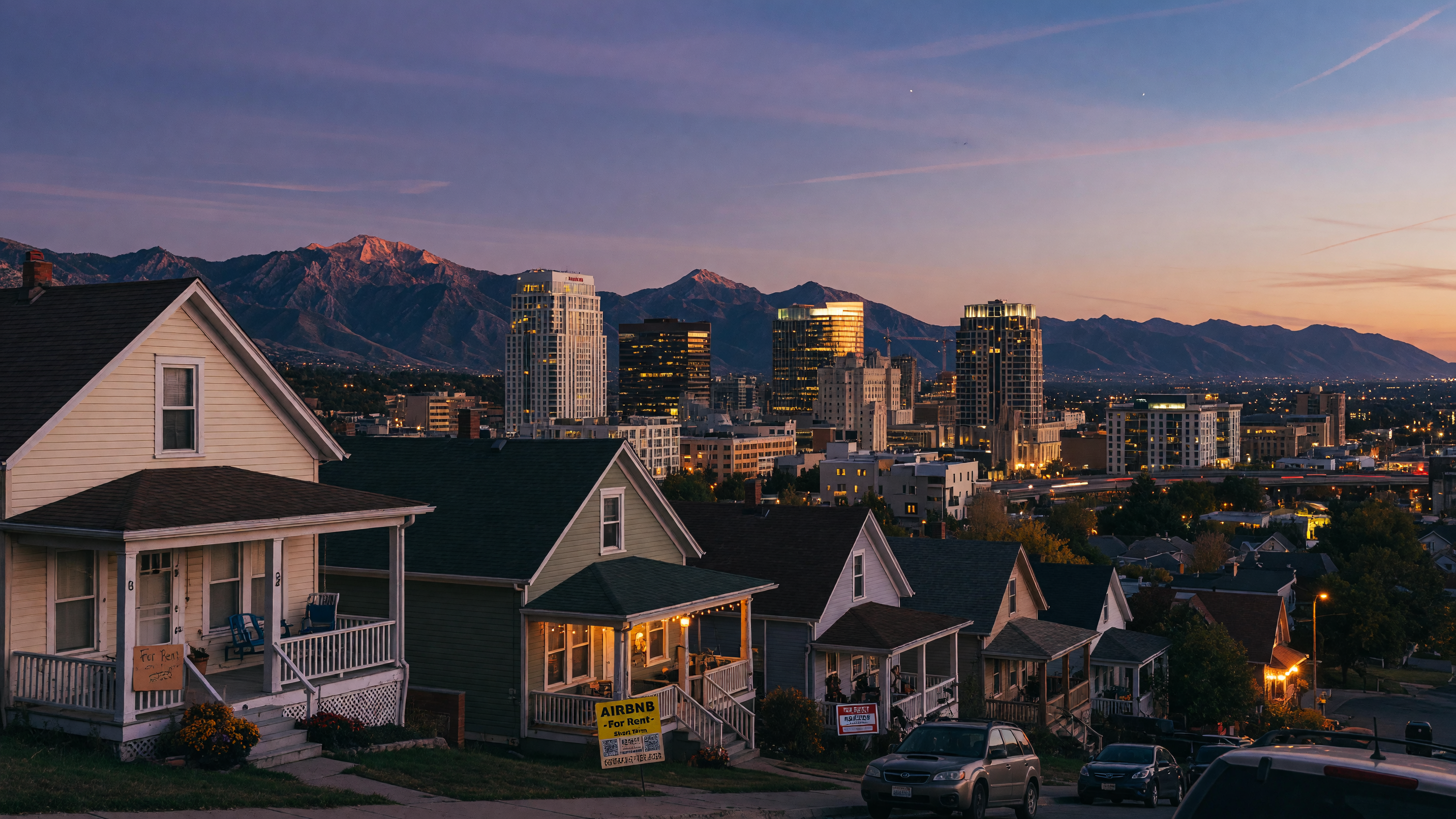
Utah does not have one statewide short-term rental rulebook. There is no statewide STR license and no uniform state definition of what counts as a short-term rental. Instead, regulation is set locally, city by city and county by county, and along the Wasatch Front that patchwork has never mattered more. As of late 2026, short-term rentals are legal in Utah, but where they can operate, and under what rules, is decided block by block at the local level.
So what does that mean for you? If you are a Wasatch Front homeowner weighing whether to list a spare room or a second property on Airbnb or Vrbo, an investor shopping for a rental property, or simply a neighbor wondering about the short-term rental down the street, this refreshed guide walks through the current landscape: how Utah law frames short-term rentals, the one requirement that applies to every host, Salt Lake City's first-ever STR licensing ordinance, how enforcement is tightening, and the owner-occupancy rules most cities now expect you to follow.
Utah Has No Statewide STR License. Regulation Is Local.
Utah Code sets the guardrails, and local governments set the rules. Under Utah Code § 10-8-85.4 for cities and § 17-50-338 for counties, a local government cannot ban short-term rentals in every zone across its borders. A 2025 state law made that limit explicit. In other words, a city or county must leave at least some areas where short-term rentals may operate. But each city and county still decides which zones allow them, and how they are licensed, taxed, and enforced.
Before we go further, here is the definition you will see again and again: a short-term or vacation rental is generally a residential property rented for 30 consecutive days or fewer. Stays longer than 30 days are treated as long-term rentals under most local ordinances. Keep that 30-day line in mind, because both licensing rules and tax rules tend to hang on it.
The One Universal Requirement: Register for State Taxes
There is no separate statewide STR license in Utah. But there is one requirement that applies to every host, everywhere: registering for state taxes. Any Utah host offering short-term lodging must register with the Utah State Tax Commission to collect and remit sales tax plus transient room tax. The statewide transient room tax component is 1.07%, and counties and cities can layer additional transient room taxes on top.
If you rent through a platform like Airbnb or Vrbo, the platform may collect and remit some of these taxes on your behalf, so it is worth confirming exactly which taxes come out of your payout and which you owe yourself. And no matter where your property sits or what your city requires, this tax registration is the one universal constant in Utah's otherwise-local short-term rental system.
Salt Lake City's First-Ever STR License: New Chapter 5.13
The biggest change of 2026 is in the state's capital. Salt Lake City enacted its first-ever short-term rental business licensing ordinance, a new Chapter 5.13 of the city code, with licenses required starting July 1, 2026. If you operate a short-term rental inside Salt Lake City limits, this is the rule to know.
Here is what the new ordinance requires:
- Zoning first: STRs are allowed only in certain zones, specifically commercial, mixed-use, downtown, and gateway districts. They are not allowed in standard residential zones. Check your zone before anything else.
- Minimum stay: Each booking must be for at least two consecutive nights.
- Nightly cap: A property can be rented for no more than 200 nights per year under the license.
- Local contact: The license holder must designate a local contact who can respond to complaints within two hours.
- One license per owner: The license is limited to one per owner and is nontransferable, and the owner must own the property.
- Annual cost: The license carries an annual fee and must be renewed each year.
- Safety codes: The dwelling must comply with city safety codes.
Key Takeaway for SLC Hosts & Investors
If your property sits in a standard residential zone, a Salt Lake City STR license is likely out of reach, no matter how the property currently lists online. Confirm your exact zone against the ordinance before you buy, lease, or advertise. And if you are already renting in an allowed zone, the July 1, 2026 license requirement applies to you.
Enforcement Is Tightening Across the State
The days of quietly running an unlicensed short-term rental are ending. In 2024, HB 256 closed the loophole that had prevented cities from using an Airbnb or Vrbo listing as the sole evidence of an illegal short-term rental. Cities now have real enforcement teeth, and several are using them.
Park City and Salt Lake City, for example, use monitoring software that scans listing platforms to flag unlicensed or noncompliant properties. If a listing is active without the right license, or in the wrong zone, enforcement is far more likely to find it now than ever before. For hosts, the lesson is simple: a public listing is not a private operation, and the city can see what you advertise.
Owner-Occupancy Is the Norm Across the Wasatch Front
If there is one pattern that defines the valley's approach, it is owner-occupancy. Across the Wasatch Front, city after city ties short-term rental permission to living in the home yourself. Sandy, Murray, Millcreek, South Salt Lake, Bountiful, and North Salt Lake all require owner-occupied short-term rentals. The details differ from city to city, but the theme is consistent: the person renting the property should be the person who lives there.
Beyond that, do not assume a neighboring city's rules apply to you. Some cities allow short-term rentals only in certain districts, while others prohibit them outright in standard residential areas. Owner-occupancy requirements, allowed zones, license fees, and stay limits all vary from one city to the next, so general rules get you only so far. Your address is what matters.
Key Differences at a Glance
| Municipality | STRs Allowed? | License Required? | Owner-Occupied? | Key Notes |
|---|---|---|---|---|
| Salt Lake City | Certain zones only | Yes (Chapter 5.13, Jul 2026) | Not required | Commercial, mixed-use, downtown, gateway zones; 200-night cap; 2-night minimum |
| Sandy | Yes (owner-occupied) | Yes | Required | Primary residence |
| Murray | Yes (hosted only) | Yes | Required | Owner present during guest stays |
| Millcreek | Yes (owner-occupied) | Yes | Required | Owner resides on the premises |
| South Salt Lake | Yes (owner-occupied) | Yes | Required | Owner-occupied units; ADUs excluded |
| Bountiful | ADU-based | Yes | Required | Owner-occupied primary or ADU |
| North Salt Lake | Yes (owner-occupied) | Yes | Required | Primary residence |
How These Rules Affect Property Values & Rental Income
The short-term rental regulatory landscape has real implications for property values and investment returns along the Wasatch Front:
Positive Effects of Clear Regulation
- Neighborhood stability: Clear rules keep residential streets residential and help prevent the "hotel-ification" of whole blocks. That tends to support long-term values for the people who live there.
- More homes for locals: Owner-occupancy requirements and zone limits keep more properties available for traditional buyers and long-term renters.
- Certainty for the compliant: For hosts who do their homework, a clear regulatory framework actually provides confidence. You know the rules, you follow them, and you can operate without looking over your shoulder.
Challenges for Investors
- Zoning reality: In cities like Salt Lake City, a home in a standard residential zone simply cannot become a short-term rental, no matter how strong the income math looks.
- Owner-occupancy friction: In Sandy, Murray, Millcreek, South Salt Lake, Bountiful, and North Salt Lake, the pure absentee-investor model is off the table. Someone has to live there.
- Compliance costs: License fees, safety-code requirements, tax registration, and the local-contact rule all add to the cost of operating an STR.
- Municipal fragmentation: Rules differ dramatically from one city to the next, and sometimes from one street to the next. Due diligence is non-negotiable.
The Bottom Line for Rental Income
Short-term rentals in properly zoned and properly licensed properties can still make sense, particularly near ski resorts, downtown Salt Lake City, and university areas. But the unregulated, platform-only STR operation is gone. The hosts who do best are the ones who confirm their address's rules first, budget for compliance, and stay ahead of changes.
Before You List: Check Your Address
Here is the most important takeaway in this entire guide: short-term rental rules vary street by street. The number one step for anyone considering an STR is to check their exact address's zoning and license requirements with their city before listing. A house two blocks away can live under different rules than yours.
- Confirm your zone. Call or visit your city's planning or business licensing office and confirm your exact address's zone, and whether short-term rentals are allowed in it at all.
- Ask about the license. If STRs are allowed, find out what license you need, what it costs, and whether owner-occupancy, stay limits, or nightly caps apply.
- Register for state taxes. Set up your sales and transient room tax account with the Utah State Tax Commission, and confirm which county and city transient room taxes apply to your address.
- Review your HOA covenants. Many HOAs along the Wasatch Front have their own short-term rental restrictions, and they can be stricter than the city's.
- Do this before you buy. If you are purchasing a property with STR income in mind, run this checklist before you make an offer, not after. STR feasibility should be part of your due diligence.
A Note Before You Go
This guide is general information, not legal or tax advice. Utah's short-term rental rules change quickly, and every property is different. Confirm your situation with your own city, and talk to a tax professional about the taxes that apply to your rental. We are happy to point you in the right direction, and the list of places to start is above.
Wondering Whether Your Property Has STR Potential?
Whether you are weighing a short-term rental on your current home, eyeing a property with vacation-rental income in mind, or just trying to understand what the new rules mean for your neighborhood, Adam and Natalie Stark are here to help. Give us a call at 801-613-0038 or email info@utahcityliving.com, and we will help you figure out what is possible for your address.
Sources
- Utah Code § 10-8-85.4, Short-term rental provisions (cities). Read the statute →
- Utah Code § 17-50-338, Short-term rental provisions (counties).
- Utah Legislature, HB 256, short-term rental enforcement amendments.
- Utah State Tax Commission, Transient Room Taxes. View the tax commission page →
- Salt Lake City, Short-Term Rentals, new Chapter 5.13 licensing ordinance (effective July 1, 2026). View the city page →
- City of Sandy, Murray, Millcreek, South Salt Lake, Bountiful, and North Salt Lake short-term rental ordinances and business license requirements.
Related Articles
2026 Market Insights
Pricing, inventory, and trends along the Wasatch Front
New Construction Guide
Upcoming communities and developments on the Wasatch Front
First-Time Buyer's Guide
Everything first-time buyers need to know in Utah
Daybreak Community Guide
South Jordan's premier master-planned community