
Why Are 3.26 Billion Gallons of Water Heading to the Great Salt Lake Right Now?
Nearly 10,000 acre-feet of water is flowing from Willard Bay to the Great Salt Lake and its surrounding wetlands during peak fall bird migration, enough to fill roughly 4,934 Olympic-sized swimming pools. Here is where the water comes from, who coordinated the release, and what it means for the Wasatch Front.
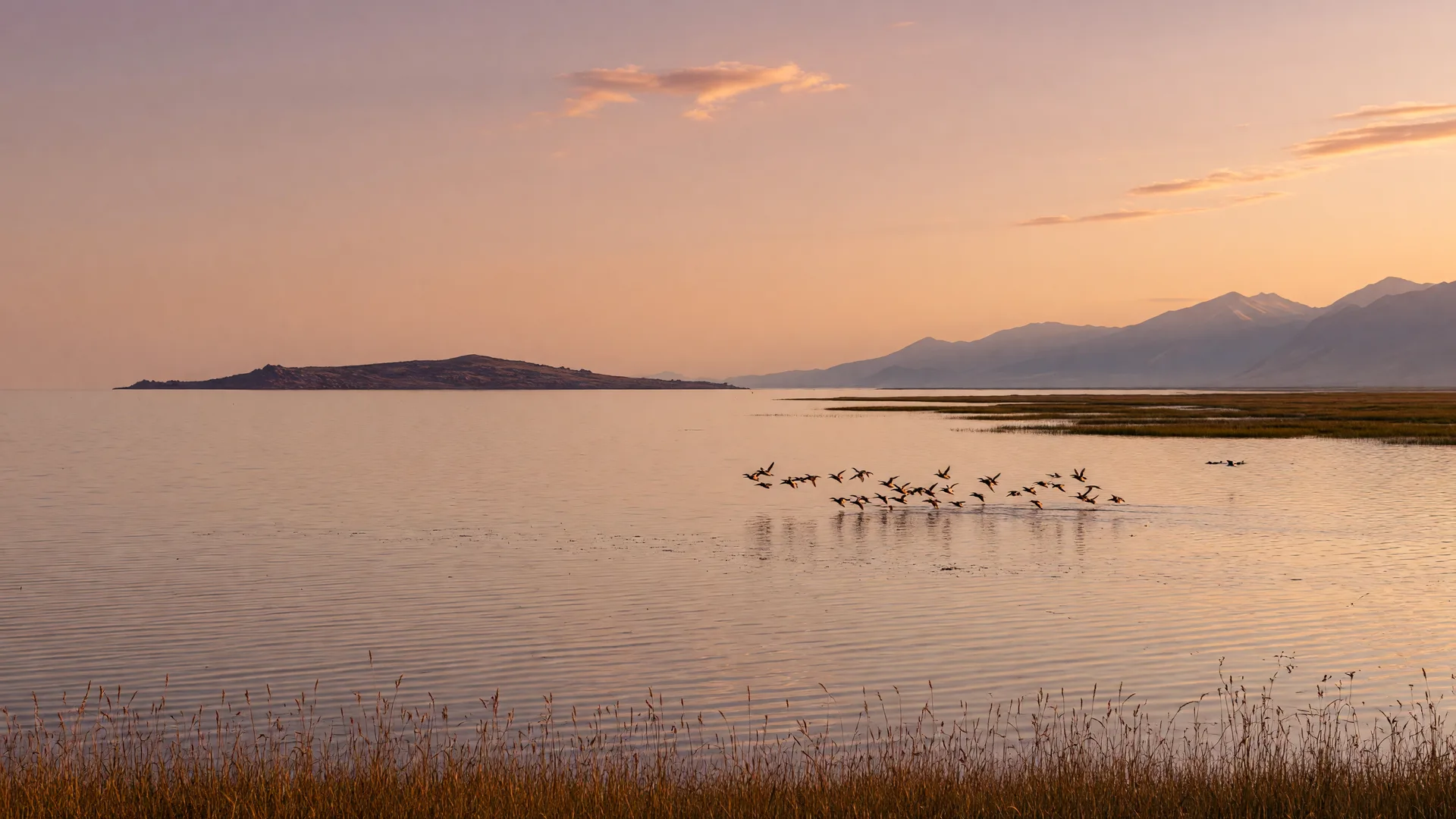
AI-generated illustration of the Great Salt Lake at golden hour used as the article hero.
The short version: A coordinated release is moving nearly 10,000 acre-feet of water, about 3.26 billion gallons, from Willard Bay to the Great Salt Lake and its wetlands right now, timed to land during peak fall bird migration. The water is largely tied to Ogden's Pineview Reservoir pipeline project, and the release was organized by the Great Salt Lake Commissioner's Office, the Great Salt Lake Watershed Enhancement Trust, and Great Salt Lake Rising. It is one piece of a longer collaborative recovery effort, not a one-time fix.
Nearly 10,000 acre-feet of water is flowing from Willard Bay to the Great Salt Lake and its surrounding wetlands this week, and it is arriving at exactly the right moment for the birds. That is about 3.26 billion gallons, enough to fill roughly 4,934 Olympic-sized swimming pools, according to the Great Salt Lake Commissioner's Office.
The release is a coordinated effort between state offices, water districts, and conservation groups, and it is tied to a major drinking-water infrastructure project in Ogden Canyon. This guide explains what is happening, where the water comes from, why the timing matters, and what it means for the communities of the Wasatch Front.
What is happening at Willard Bay right now?
Water is moving out of Willard Bay and toward the Great Salt Lake and its surrounding wetlands during peak fall bird migration. The release totals nearly 10,000 acre-feet, which the Great Salt Lake Commissioner's Office describes as about 3.26 billion gallons, or enough to fill roughly 4,934 Olympic-sized swimming pools.
The timing is deliberate. Millions of waterfowl and shorebirds stop at the lake each fall on their way along the Pacific Flyway to their wintering grounds, and water deliveries during that window add food and habitat at the Willard Spur and Bear River Bay waterfowl management areas, which the Utah Division of Wildlife Resources manages. In other words, this is water arriving when the birds can actually use it.
Who coordinated the release?
The release was coordinated by the Great Salt Lake Commissioner's Office, the Great Salt Lake Watershed Enhancement Trust, and Great Salt Lake Rising. Great Salt Lake Commissioner Hannah Freeze framed it as a shared effort that goes beyond any single organization.
"This water release highlights the crucial importance of collaboration to support and sustain the Great Salt Lake. The health of the lake is bigger than all of us, and it will take all of us continuing to work together to help restore it," said Great Salt Lake Commissioner Hannah Freeze.
Where does the water come from?
The release is largely tied to Ogden's Pineview Reservoir pipeline project, which sent water to Willard Bay during construction. Pineview was drained over the summer for the $100 million Ogden Canyon 36-inch Pipeline Replacement, a project that swaps out a 6.4-mile transmission line supplying about half the drinking water for more than 120,000 residents in Ogden and nearby communities.
Much of the water is leased from the Ogden River Water Users Association. Water leased from Huntsville Abbey Farm and water committed by Ogden City are also part of the release. That mix matters: the water was already in the system, and this delivery puts it to use for the lake rather than letting it sit idle.
How does the water get from Willard Bay to the lake?
The Weber Basin Water Conservancy District moves the water from Willard Bay to Willard Spur, using infrastructure the district already operates. General manager Scott Paxman pointed to the value of that existing system in making the delivery possible.
"Through innovative partnerships like this one, we can extend the impact of our water management and utilize our infrastructure to make deliveries like this possible to support the health of Great Salt Lake and Willard Spur," said Scott Paxman, the district's general manager.
Why does the timing matter for birds?
Fall is the busiest season on the lake's shorelines. Millions of waterfowl and shorebirds stop at the Great Salt Lake each autumn on their way along the Pacific Flyway to their wintering grounds, and shallow, food-rich wetlands are exactly what they need for that journey. The Willard Spur and Bear River Bay waterfowl management areas, managed by the Utah Division of Wildlife Resources, are the primary destinations for this delivery, which means the water lands where birds gather rather than simply raising the lake's overall level.
What else is Utah doing to help the lake?
The state has also turned to agricultural optimization, secondary metering, invasive vegetation removal, and better wetland management as part of the broader effort. Voluntary water leasing sits at the center of much of that work, and the National Audubon Society and The Nature Conservancy lead the Great Salt Lake Watershed Enhancement Trust that helps make leases like this one happen.
"National Audubon Society and The Nature Conservancy, as leaders of the Great Salt Lake Watershed Enhancement Trust, are excited to be a part of this cooperative effort to bolster voluntary water leasing efforts already underway for the lake," said Marcelle Shoop, the trust's executive director.
The Willard Bay release is one example of that leasing model in action: water that would otherwise sit in storage is temporarily directed to the lake, with the people who hold the water rights participating voluntarily.
Why does the Great Salt Lake matter to Wasatch Front residents?
The Great Salt Lake is the largest saltwater lake in the Western Hemisphere and a keystone of Utah's ecosystem and economy, even for families who never visit its shore. Millennia of bird migration depend on it, the brine shrimp industry relies on its waters, and lake-effect snow helps feed the Wasatch ski season that anchors winter recreation and tourism.
There is also a direct air-quality connection. When the lake is low, exposed lakebed dust can blow into the Salt Lake Valley on windy days, and that is a concern residents notice far from the water. For the communities of the Wasatch Front, the lake's health shows up in the air they breathe, the snow they ski, the birds they see, and the recreation they enjoy.
What it means for Utah
It is worth being honest about scale: a single release, even one of nearly 10,000 acre-feet, is not a full fix for a lake that has spent years below healthy levels. But the encouraging part is the pattern. State offices, water districts, conservation groups, and private water users are lining up around the same goal, and this release shows that the infrastructure and the relationships to move meaningful volumes of water already exist.
For the communities of the Wasatch Front, that cooperation matters beyond the birds. A healthier lake means cleaner air on windy days, steadier lake-effect snow for the mountains, a stronger brine shrimp industry, and better recreation for everyone. The Willard Bay release is a reminder that the lake's recovery is a long, collaborative project, and that the region keeps finding new ways to move it forward.
If you are thinking about buying or selling a home anywhere along the Wasatch Front, the health of the lake is part of the picture, and so is the community around you. Adam and Natalie would love to help you find the right fit, whether you want to be close to the wetlands, the mountains, or the heart of the valley.
Questions about life along the Wasatch Front?
Adam and Natalie help buyers and sellers across the Wasatch Front, from Daybreak and South Jordan to Draper, Sandy, Herriman, and beyond. Book a call, phone, or email anytime for a relaxed conversation about your goals.
A note on sources: figures and quotes in this article come from the Great Salt Lake Commissioner's Office and the organizations named in the release announced October 6, 2026.
Related Articles
About the Authors

Stark Group Real Estate is a premier husband-and-wife real estate team serving Utah's Wasatch Front. Combining high-level financial acumen with cutting-edge marketing, Adam and Natalie deliver a highly supportive, tech-forward, and top-tier experience for buyers and sellers across a wide range of life transitions.