
University of Utah Health Campus Coming to The Point in Draper: What It Means for the Local Market
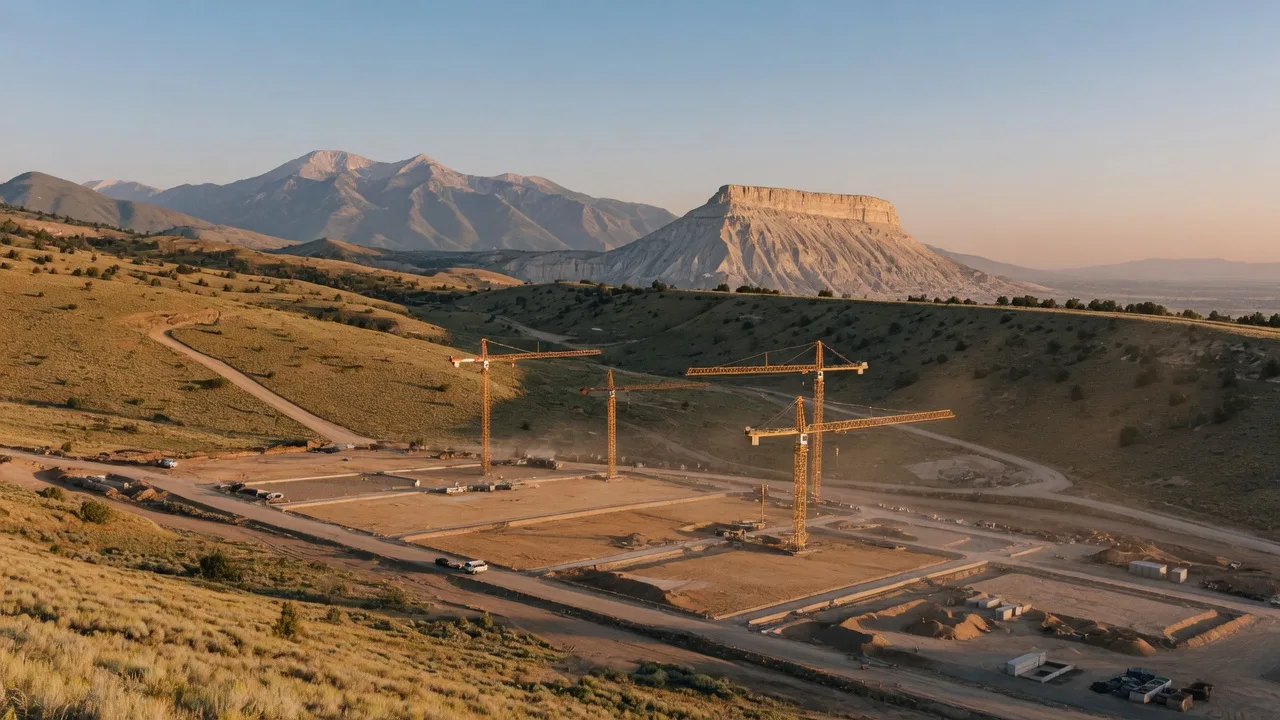
University of Utah Health is moving forward with plans for a major new health campus at The Point in Draper, the roughly 600-acre master-planned development rising on the site of the former Utah State Prison at Point of the Mountain. University officials announced the plans in June 2026, and on June 25 a purchase and sale agreement was signed among University of Utah Health, the State of Utah, and the Point of the Mountain State Land Authority, which oversees The Point. Below is what has been publicly announced so far, what a project like this can mean for nearby cities along the Wasatch Front, and what we plan to watch as the campus moves from concept toward construction.
What the announcement covers
Based on University of Utah Health announcements and public reporting, the plans call for a full-scale academic health campus on about 46 acres of state-owned land at the northeast corner of The Point. The campus could include a hospital, an emergency department, outpatient clinics, and mental health services, alongside research, education, and innovation space, with an initial facility of roughly 200,000 square feet expected to anchor the first phase.
The agreement also makes University of Utah Health the exclusive health care provider for The Point for a multi-year term, giving the university a long runway to plan around the development's build-out. Officials have described the goal as bringing care closer to home for residents of the southern Salt Lake Valley and northern Utah County, an area that sits between two of the region's fastest-growing job corridors.
Design and sizing are still in early conceptual phases, and the university has not announced a construction timeline for the campus. In other words, the land agreement is done, but the architecture, approvals, and building phases are just beginning.
The Point: from prison site to master-planned district
To understand why this matters, it helps to know what The Point is. The former state prison property sat at Point of the Mountain, the saddle between the Salt Lake and Utah valleys, for decades before the state began planning its redevelopment. The Point is now a state-led master-planned development spanning roughly 600 acres in Draper, overseen by the Point of the Mountain State Land Authority with a master plan prepared by the firm Skidmore, Owings & Merrill.
Years of horizontal work came first: demolishing the old prison structures, replacing and upgrading infrastructure, and extending roads and trails through roughly 2025. Vertical construction began in 2026, marked by a ceremonial groundbreaking on June 29. Phase 1 of the project, reported at around $2.3 billion in private investment, includes apartments, a hotel, retail, open space, and roughly 900 for-sale homes, with the first vertical projects reported as a roughly 5,000-seat entertainment venue and a multifamily building with ground-floor retail.
The Point sits right along the Silicon Slopes corridor, the stretch of tech and life sciences employment that runs from the southern Salt Lake Valley through Lehi and beyond. That location is part of why the project has drawn so much attention from buyers, sellers, and investors watching the region. For more on how the development is reshaping Draper, see our updated Draper neighborhood spotlight.
What a health campus can mean for housing and commutes
Large employers shape housing markets in indirect but real ways, and a health campus is a large employer. A hospital and clinic network brings doctors, nurses, technicians, and support staff, and those workers make housing decisions based partly on how far they are willing to commute. When a big employment center lands in a city, it is reasonable to expect more households to weigh that city and the surrounding communities, Draper, South Jordan, Sandy, and Lehi among them, when deciding where to live.
Health campuses can also pull in supporting development over time: labs, medical offices, pharmacies, and services that follow the patients and the workforce. That kind of build-out shapes an area's character and amenities on a multi-year timeline rather than overnight.

This is also why buyers and sellers watch development announcements. Big projects signal where an area is heading on a five-to-ten-year horizon. Anticipation can change behavior: buyers stretch for areas they expect to grow, sellers time listings to a project's momentum, and investors price land accordingly. None of that is unreasonable, but it is worth keeping perspective.
A land purchase agreement is not a finished campus. The health facility is in early planning, design and entitlement work take time, and construction could add years on top of that. The Point's full build-out is expected to take decades. Housing prices respond to many forces, mortgage rates, inventory, affordability, and the broader economy among them, and no single announcement reliably moves them in the near term. If you hear someone claim a specific price effect from this news, treat the claim with skepticism; that kind of certainty just is not available yet.
What to watch
Between now and opening day, here is what we plan to keep an eye on:
The Point construction milestones
The first vertical buildings, sales announcements for the Phase 1 for-sale homes, and any design, entitlement, or timeline updates from the health campus partnership.
Canyons District school news in Draper and Sandy
Boundary reviews, capacity, and facility announcements often follow growth in employment and housing, and school news tends to move buyer interest as much as headline projects do.
Downtown Daybreak progress in South Jordan
The retail and restaurant rollout, the ballpark district, and new residential deliveries in Daybreak's growing downtown, the region's other large master-planned benchmark.
UDOT corridor work in the area
Projects along the I-15 and Bangerter corridors that shape commute times between Salt Lake and Utah Counties, a practical factor for anyone weighing a home near The Point.
The bottom line
The Point is one of the largest development efforts in Utah's modern history, and a University of Utah Health campus would be a significant anchor for the project. For people who live in, or are moving to, Draper, South Jordan, Sandy, and Lehi, it is a sign of long-term investment in the corridor. But the timeline is measured in years, and the near-term effects on prices are genuinely uncertain. Treat the announcement as context for your plans, not as a reason to rush a decision.
For information only. Nothing in this article is legal, financial, or investment advice, and it is not a substitute for talking through your own situation with the right professionals.
Questions about the market around The Point?
Whether you are buying, selling, or just weighing your options in Draper and the surrounding communities, we are happy to talk through what the announcement could mean for your plans. No pressure, just a conversation with people who know the corridor.

Related Articles
Draper: The Point Breaks Ground & a Market Update
The full late-summer 2026 Draper neighborhood spotlight
New Construction Across the Wasatch Front
September 2026 developments in Draper, Daybreak, and beyond
South Jordan & Daybreak Update
Downtown Daybreak and the South Jordan market in 2026
Lehi: Silicon Slopes Update
Lehi and the northern Utah County market in 2026